
INTERVIEW: Dr Emma O’Keeffe
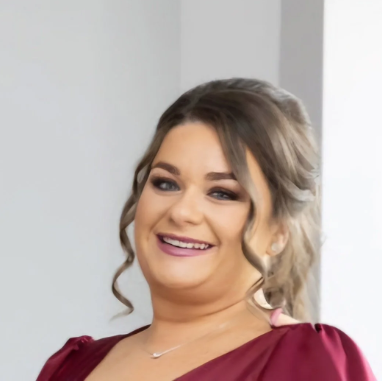
Dr Emma O’Keeffe
We were delighted to interview Dr Emma O’Keeffe, a soprano, scholar, and member of the IBSL Artistic Advisory Committee, whose critical work has brought several of Ina Boyle's major scores—including her magnificent orchestral pieces—back to life.
In this Q&A, Dr O'Keeffe discusses the pivotal relationships that shaped her research, the unique inspiration Boyle drew from her home at Bushey Park, and her own emotional connection to the composer's genius.
To start, could you tell us a bit about yourself and what initially sparked your interest in Ina Boyle?
I am primarily a soprano, although I play a bit of piano—I definitely have singer's fingers! I completed my undergraduate degree in music and I then went on to pursue a Master’s in Philosophy with Dr. Kerry Houston and Dr Maria McHale, my supervisors (TUD).
“My introduction to Ina Boyle was honestly quite unromantic—
it was pure chance! ”
My introduction to Ina Boyle was honestly quite unromantic—it was pure chance! I was starting my master’s and looking at a list of composers whose music needed editing and typesetting. I saw her name, and she was likely the only female composer on the list, which initially drew me in. I felt strongly that female composers should be represented, especially considering there were none on the Leaving Certificate syllabus in Ireland at the time.
My initial piece was her Elegy (1913) for cello solo and orchestra. It quickly snowballed from there; I chose her as my subject, and I ended up editing five pieces. I did two years of a Master's, and then instead of submitting my research, I transferred to PhD level to continue with the same research, which ended up being five big works. That was a much better choice than having to start a whole new topic.
Following your initial discovery, you were introduced to the Ina Boyle Society. How did that happen, and how has the movement to revive her music grown since then?
Quite quickly after I chose her, I was introduced to Katie Rowan (relative of Ina and founder of the Ina Boyle Society), who was on a trip to Ireland at the time. We talked about Ina Boyle, and she told me about the Society and the website. At that time, the website was very basic; there weren't many performances or much going on.
In the last 10 years, since then, it has just boomed, which has been fantastic. I even managed the website for a while, but it got too big, which is a great testament to her music. I feel incredibly lucky to have had Katie Rowan and the late Dr Ita Beausang in my corner, championing Ina's music. Having those two women—who were so knowledgeable and passionate—behind me and behind Ina's work was wonderful. It created a great, primarily female group working to bring her music to the fore, and their lifelong research has been an inspiration.
“I feel incredibly lucky to have had Katie Rowan and the late Dr Ita Beausang in my corner, championing Ina’s music.
Having those two women—who were so knowledgeable and passionate—behind me and behind Ina’s work was wonderful.”
In the last 10 years, since then, it has just boomed, which has been fantastic. I even managed the website for a while, but it got too big, which is a great testament to her music. I feel incredibly lucky to have had Katie Rowan and the late Dr. Ita Beausang in my corner, championing Ina's music. Having those two women—who were so knowledgeable and passionate—behind me and behind Ina's work was wonderful. It created a great, primarily female group working to bring her music to the fore, and their lifelong research has been an inspiration.
You worked extensively with the manuscripts at the Trinity College Dublin archive. Could you elaborate on that archival work and what it felt like holding those original works of Ina’s?
I worked with the archives both physically and through the online repository. It was incredibly emotional, and the more of her music I set, the more personal it became. You see something and think, What was she thinking about this? What was going on in her life when she chose this piece?
A lot of her music was based on a poem or some kind of literary influence, and I was deeply engaged by all of the themes she chose. She has such a broad range of interests—her understanding of everything from Greek mythology to literature was phenomenal. Out of the five pieces I did for my PhD, two were purely orchestral works: Elegy and Psalm. Although beautiful, they weren't based on anything specific, which was unusual for her later works, but they were some of her earliest pieces.
“You see something and think, What was she thinking about this? What was going on in her life when she chose this piece?”
I also typeset and edited her earliest ballet. It was fascinating because she had drawn her own watercolour sketches of the costumes and what she thought the scenes would look like, presumably drawing inspiration from books in the library at Bushy Park. I just loved looking at her original sketches and seeing where she drew her ideas from.
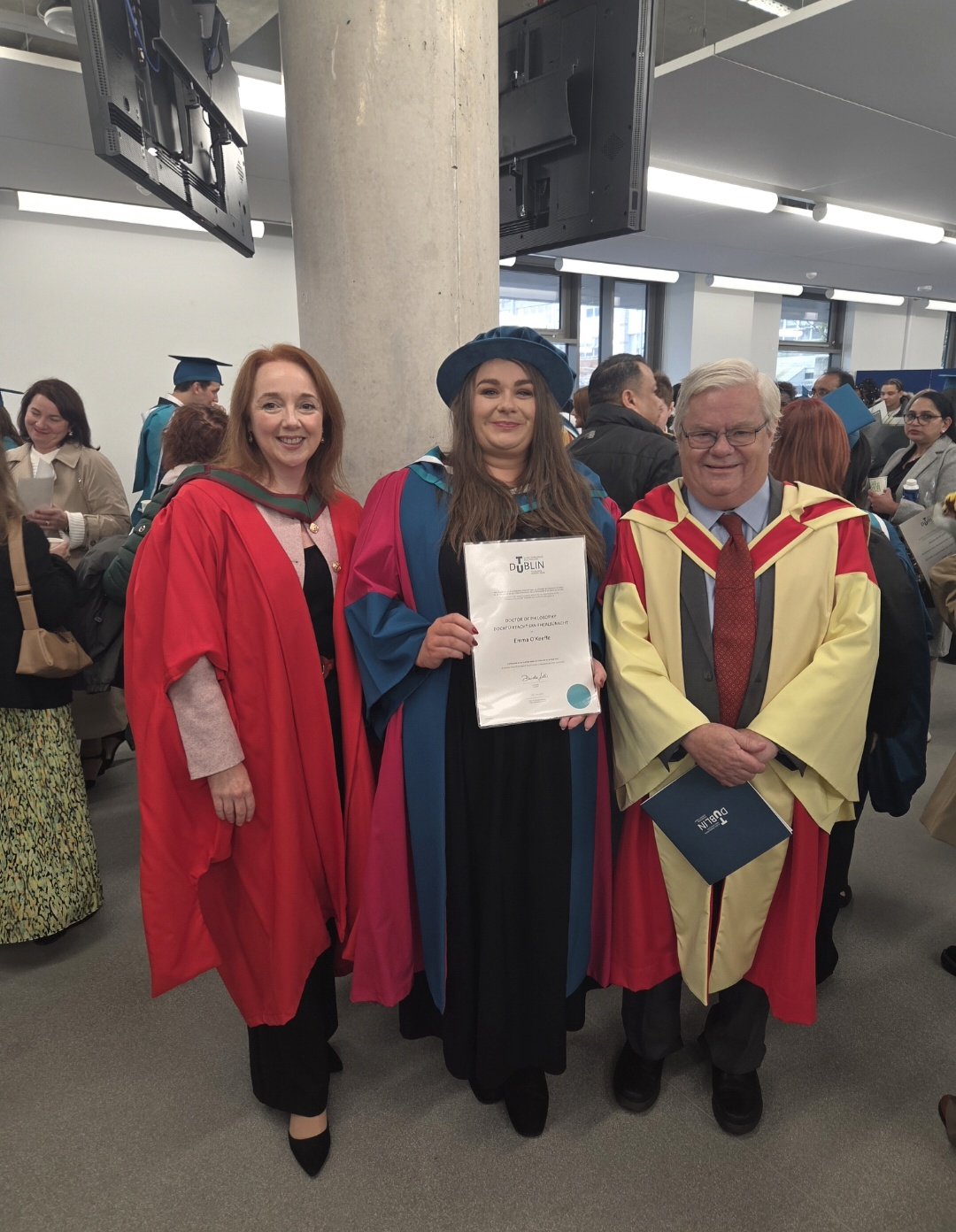
Dr Emma O’Keeffe with supervisors, Dr Maria McHale (TUD) and Dr Kerry Houston (TUD).
What were the biggest challenges you faced during this process, especially moving from academic work to seeing your editions performed?
The biggest panic moment was when the opportunity came around for a performance of the Elegy with a high-profile orchestra in Germany. It was going to be the premiere performance and recording, and that was a moment of total panic for me. I was certain they would find a million mistakes, fire me, and cancel the performance.
It was a big moment of imposter syndrome—I felt a professional should be doing this. I don't think I took a breath during the entire recording; I was waiting for someone to turn around and say, "This is wrong." I had every manuscript out in front of me just in case the conductor had a question! In my naivety, I thought they would have practiced for ages, but they just sight-read it, which added to the panic. Thankfully, it all went well, and there were no issues.
Could you enjoy listening to this first performance of your edition?
I didn't get to enjoy the moment because I was so focused on the panic. However, it was such good experience for me as a young editor in my early twenties. I got the opportunity to talk to the conductor and the lead musicians, and they gave me fantastic, practical feedback. They said, "Next time, try to condense the parts scores to one page," or "We don't like that font or that layout." As a soprano, you're used to doing whatever you like, but now I had to learn to make it easier for the orchestra to follow. It gave me a great insight into how they work as a well-oiled machine.
The ultimate reward was that the pieces I typeset weren't just going to be stuck on a shelf in a thesis for years—they were going to be performed and have gone on to be performed numerous times outside of Ireland.
What was the moment or discovery that truly cemented your connection to Ina Boyle?
I loved looking at all her manuscripts. A handwritten manuscript is a special thing to hold and look at; you know that she touched it and she wrote every note herself. You can trace the development of her music and her hand as she learned from Ralph Vaughan Williams and her other teachers.
But for me, one big moment, particularly emotionally, was when a few members of the Society and I went to visit her house in Bushey Park.
The owner at the time, Chris De Burgh, was super enthusiastic and tried to preserve a lot of the history. We saw the original fireplaces, and there’s a beautiful sundial tiled into the floor of what was the kitchen. It was so surreal being there, thinking, This is where she played music; this is where her family was. It was lovely to see it and that Chris and his wife Diane had an interest in the history of the house as well. There was a lot of restoration and they did a beautiful job. So that was a really big moment for me.
A full-circle moment was seeing a beautiful solid stone bird bath in the courtyard. Later, with the discovery of one of Ina’s sketchbooks, there was a beautiful sketch of that exact bird bath. Her mother’s name is even engraved on it. It made her life completely real.
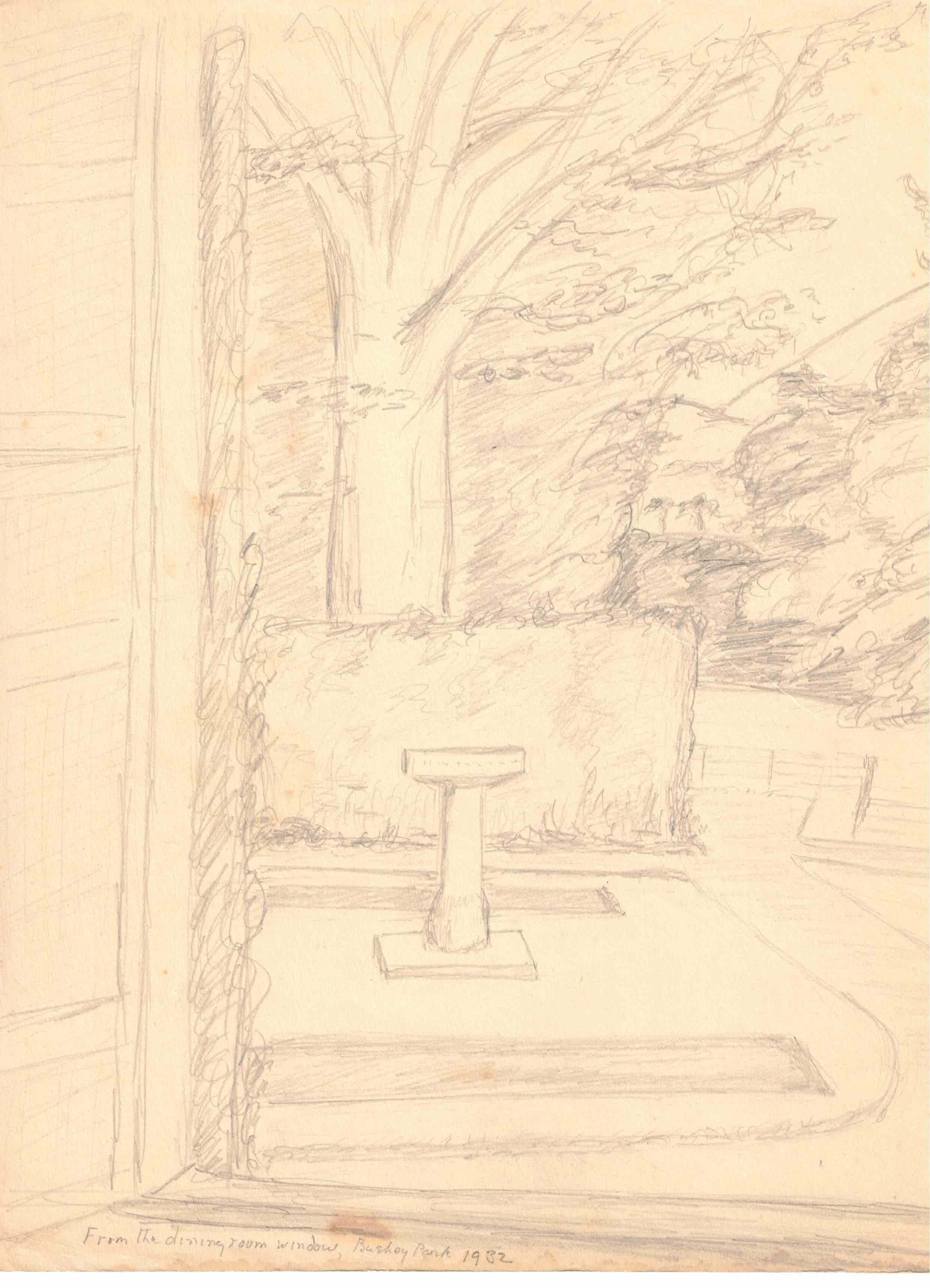
View from the dining room sketch, by Ina Boyle, 1932.
Image © The Board of Trinity College Dublin
You also mentioned how much her surroundings inspired her. Would you like to see her music performed at Bushey Park again?
Absolutely. I would love to go back just to perform one piece so that the house hears her music again. There’s a beautiful forecourt overlooking the Wicklow hills, and one of her smaller chamber works would be perfect for that setting.
When you’re standing there and looking out at the mountains, you totally understand where her inspiration came from. She was so content at home in Bushey Park and loved it.
Ina Boyle made trips to London for lessons and to network. Do you think staying in Ireland, despite her family responsibilities, was a choice rooted more in her contentment with Bushey Park?
I think she was Wicklow through and through. She was just so at one with Bushey Park, and I believe that is simply where she was meant to be. While her family responsibilities certainly played a part, it’s also the home of her inspiration. I don’t think it needs to be overthought—it was her personality; that’s where she wanted to be, and that’s where she stayed.
People think, Oh, she should have travelled more and had more experience, but what she accomplished just by being in Bushey Park is amazing. It’s important to change the narrative from "what she could have done if she’d travelled more" to recognising the magnificent work she did accomplish right there at home. It’s sad that her music is only coming to life now, nearly 60 years after she passed away, but so many people are rooting for her.
Given the general lack of awareness of female composers, what role should education play in promoting Ina Boyle's work?
There should be a big push to introduce Ina Boyle into music curricula. While many female composers deserve study and recognition, Boyle is arguably one of the most deserving. Ina has everything; all the genres, including orchestral and chamber. There's so much to take from and to learn from. There have been small steps; some of her songs are currently included in the RIAM examination syllabus, mostly on the vocal syllabus and there's a small study on her in the Irish Junior Certificate.
If you had to select one piece of music that you think encapsulates Boyle's genius and should be required listening, what would that be and why?
I don't have one single piece, but I think her orchestral works are some of her best. Her symphonies, like The Wild Geese and Glencree, and her other orchestral pieces are all so great. I am a bit biased towards the two pieces I worked on for my PhD: the Elegy from 1913 and Psalm from 1923.
Those are two super works that it would be a pity if they had never been typeset. When you work with the handwritten manuscripts, it’s a total jigsaw puzzle piecing together all the different sources and variations, but the outcome for those two pieces was fantastic. Even though we don't know what specifically inspired them, you can feel that they were inspired by something special to her. A lot of the music she wrote should now be part of standard listening.
What are your future plans and ambitions regarding Ina Boyle?
I certainly hope I'm with Ina for life! I would feel like I was doing her a disservice not to continue, especially to pay homage to Katie Rowan and Ita Beausang's work.
“I certainly hope I’m with Ina for life! ”
I've just started a new editing project, which I’m hoping to call "Women of Indomitable Will," which is a nice little nod to both Ina Boyle and Ita Beausang. I’m starting by doing some smaller chamber works—such as those for tenor/soprano solo and string quartet—as they have better performance opportunities than the bigger orchestral pieces.
I also have my eye on a couple of bigger works, like The Prophet for baritone and orchestra, which is interesting as it has Russian literary influences—something I haven't seen elsewhere in her work. The goal is to keep getting her music performed. I think it’s a good time now to focus on pieces that haven't been done before, so premier performances and recordings are the aim.
My long-term ambition is to complete the typesetting and editing of her other two ballets from the 1930s. They are much bigger works, but possibly more suitable for performance than her first one. A full performance of a ballet would be amazing, but even an orchestral performance would be lovely. We are lucky to have built up such a good relationship with enthusiastic performers who are just waiting for new editions to play.
Finally, if you could say one thing to Ina Boyle, what would it be?
I think I would simply thank her for her beautiful music. It’s funny, Ita Beausang said ‘Ina Boyle gave you your career’, which is so true. It would be lovely to have known her in some way or met her, but I think the visit to Bushy Park was a big connection to that, and it was really, it was lovely.
We’re also so lucky we had Elizabeth Maconchy and Nicola LeFanu who knew her personally and we have that insight into her life. I think my final word be that I am very grateful to have come across Ina Boyle and that I had the opportunity to be involved with the Ina Boyle Society, and with Katie Rowan and Ita Beausang.